
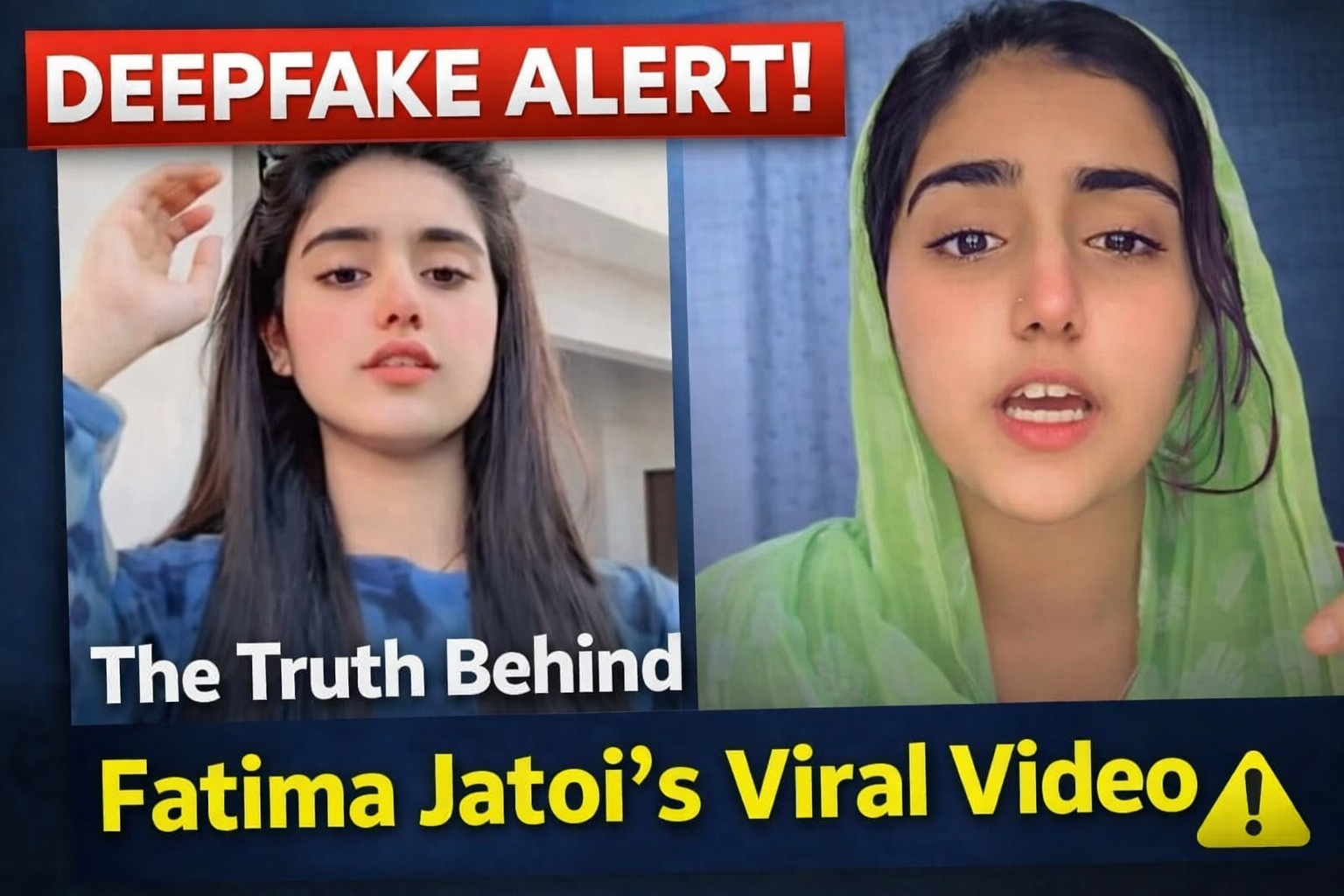
The dark side of social media fame has struck again, this time targeting a prominent figure in the Pakistani digital community. A video tagged with the specific timestamp “6 minutes 39 seconds” has been circulating rapidly across platforms like X (formerly Twitter) and WhatsApp, allegedly featuring TikTok star Fatima Jatoi.
However, as with many recent viral scandals involving female influencers, the narrative is not what it seems. Reports indicate that the clip is the latest in a disturbing string of deepfake attacks content manipulated by artificial intelligence to superimpose a person’s likeness onto explicit footage. This incident highlights the growing weaponization of technology against women in the public eye and raises serious questions about privacy and platform responsibility in Pakistan.
Another Deepfake: The “6 Minutes 39 Seconds” Controversy
The controversy began when a video file, specifically noted for its duration, began trending under Fatima Jatoi’s name. In the age of AI, the line between reality and fabrication has blurred dangerously. Sources close to the influencer and digital forensic experts suggest that the video is a “deepfake”—a sophisticated manipulation where the face of the TikToker was digitally grafted onto the body of another individual in a compromising situation.
This technique is increasingly used to harass, shame, and intimidate women online. For influencers like Jatoi, who build their livelihoods on their public image, such attacks are devastating. They attack the victim’s reputation within conservative social structures where “honor” is highly prized. The immediate spread of the link, often accompanied by derogatory commentary, exposes the mob mentality that often dominates social media trends, where users share content before verifying its authenticity.
Who is Fatima Jatoi?
For those unfamiliar with the name prior to this controversy, Fatima Jatoi is a well-known content creator hailing from the Sindh province of Pakistan. She has carved out a significant niche on TikTok, known for showcasing Sindhi culture, engaging in popular lip-sync trends, and sharing glimpses of her daily life.
Her content is generally lighthearted and culturally resonant, earning her a loyal following within the Sindhi-speaking community and beyond. Unlike controversial figures who thrive on scandal, Jatoi’s rise to fame was largely built on relatable, regional content. This makes the sudden emergence of an explicit video even more jarring and points further toward a targeted malicious attack rather than a genuine leak.
Understanding the Landscape: TikTok in Pakistan
To understand the magnitude of this scandal, it is helpful to look at the broader ecosystem of TikTok in Pakistan. The platform is massive, acting as a primary source of entertainment for millions, but it is also a minefield of political and social sensitivities.
Who is the Best TikToker in Pakistan?
While “best” is subjective, if we look at numbers and influence, Jannat Mirza is widely considered the queen of Pakistani TikTok. She was the first Pakistani TikToker to cross 10 million followers and continues to hold one of the largest audiences in the country.
Mirza, along with her sisters, set the template for TikTok fame in the region: high-production lip-syncs, fashion modeling, and carefully curated lifestyle vlogs. Her massive success paved the way for regional creators like Fatima Jatoi to build their own audiences. However, even top-tier creators like Mirza have faced their own share of trolling and controversies, proving that no level of fame offers protection from the toxic side of social media.
Who is Fatima Bhutto?
During the search frenzy regarding Fatima Jatoi, search algorithms often conflate her with another prominent “Fatima”—Fatima Bhutto. It is crucial to distinguish between the two, as they occupy entirely different worlds.
Fatima Bhutto is not a TikToker. She is a celebrated author, columnist, and member of one of Pakistan’s most famous political dynasties. The niece of former Prime Minister Benazir Bhutto and granddaughter of Zulfikar Ali Bhutto, she is known for her literary works like Songs of Blood and Sword and her critical commentary on global politics and culture. While she is active on social media (primarily X/Twitter), her presence is intellectual and political, standing in stark contrast to the entertainment-focused world of Fatima Jatoi.
Who Owns TikTok in Pakistan?
The platform itself is not Pakistani-owned. However, its operation in Pakistan is heavily regulated by the Pakistan Telecommunication Authority (PTA).
The app has faced multiple bans and un-bans in the country over allegations of promoting “immoral content.” This regulatory tension makes the environment even more volatile for creators. When scandals like the Jatoi deepfake emerge, they often provide ammunition for critics who argue the platform should be banned entirely, placing further pressure on creators to maintain a spotless image in an environment where bad actors can manufacture scandals using AI.
The Danger of Sharing Unverified Content
The “6 minutes 39 seconds” viral video serves as a grim reminder of the ethical responsibilities of social media users. By searching for, clicking on, and sharing these links, users contribute to the victimization of the subject.
In cases of deepfakes, the person in the video is a victim of identity theft and digital sexual violence. As AI technology becomes more accessible, distinguishing between real and fake content will only become harder. The most effective defense against these attacks is a user base that refuses to engage with unverified, sensationalist leaks.
If you encounter the video or links purporting to show it, the responsible action is to report the content to the platform administrators immediately rather than circulating it further.